

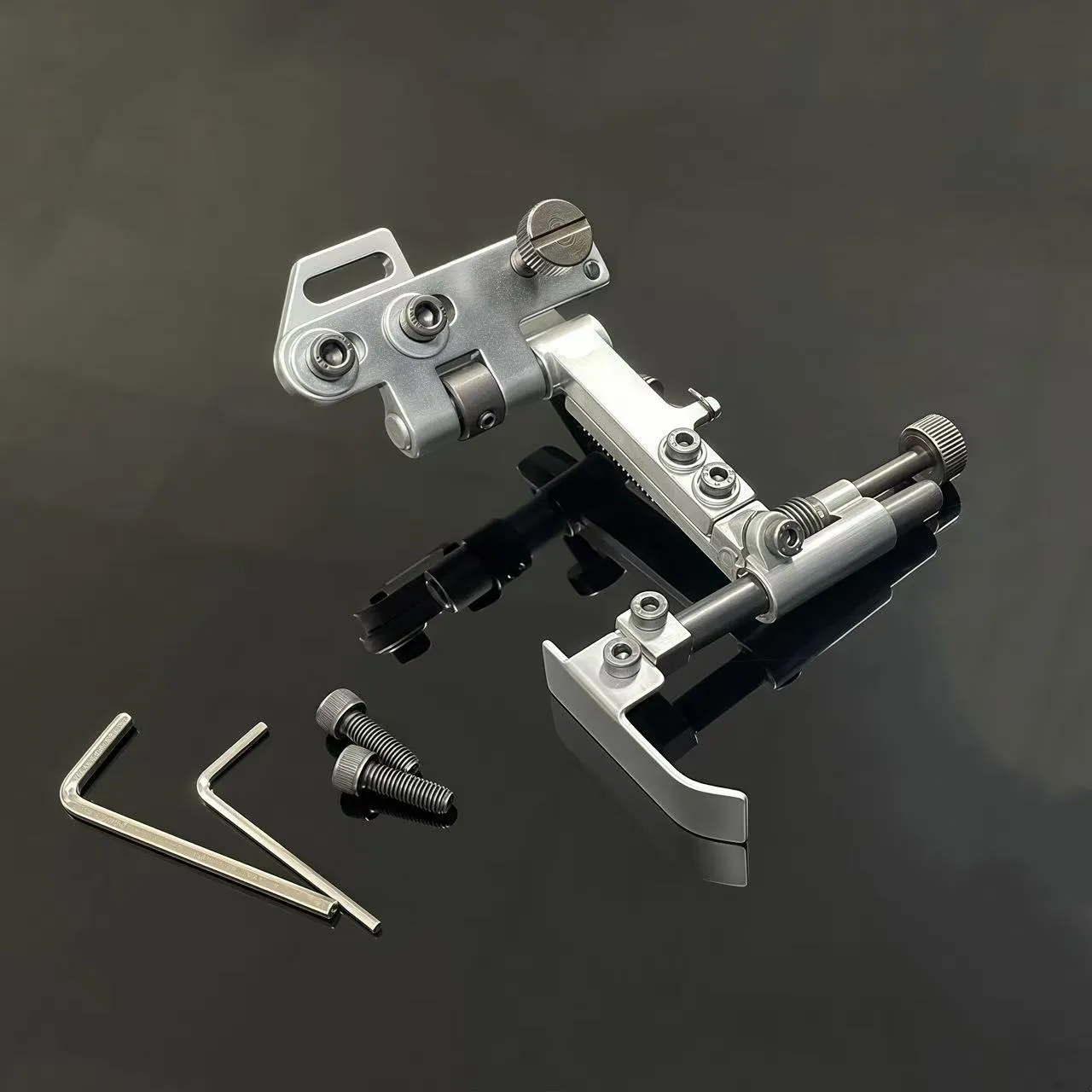
In the sewing processing industry, including clothing, home textiles, leather, and fabrics, the straightness of stitches, the consistency of edge width, and the overall neatness of the product are core standards for measuring the quality of sewing craftsmanship. Many sewing defects, such as crooked stitches, inconsistent stitch widths, and inconsistencies in batches, are not due to operational skills issues, but rather the lack of standardized positioning aids. The edge guide, as the most basic and frequently used auxiliary accessories in sewing production, are core tooling for solving problems such as sewing deviation, inaccurate dimensions, and unstable quality. They are essential tools for standardized sewing operations.
I. What is a edge guide?
A sewing machine gauge, also commonly known in the industry as a guide, edge protector, guide ruler, or positioning gauge, is an auxiliary positioning accessory installed on the needle plate, machine base, or presser foot of a sewing machine. Its principle is to fix the fabric feed position through physical limiting, replacing manual visual alignment, thereby achieving a consistently equidistant, straight, and stable sewing effect. It is suitable for most sewing equipment, including household sewing machines, industrial flatbed sewing machines, and special-purpose sewing machines.
II. Functions
- Precise Distance, Consistent Stitch Width
Controls the distance between the seam and the fabric edge (or the previous stitch), ensuring consistent width for edges, topstitching, and binding (e.g., 0.6cm, 1cm), avoiding inconsistent widths due to visual estimation.
- Forced Guidance, Straight Stitches
Uses physical edge guards to hold the fabric edge in place, preventing fabric slippage, curling, and wrinkling, especially with thin materials (chiffon, silk) or during high-speed sewing, maintaining straight stitches.
- Stable Feeding, Improved Efficiency
Eliminating the need for frequent fabric adjustments, allowing beginners to quickly learn; reduces auxiliary processes such as chalking and marking, suitable for mass production.
- Unified Standards, Consistent Quality
Even and symmetrical topstitching/edges at collars, cuffs, plackets, hems, and trouser legs enhance the aesthetics and consistency of the finished product.
- Multifunctional Adaptor
Suitable for various processes such as straight seams, parallel quilting, hemming, splicing, edge application, and concealed stitching; the magnetic gauge allows for quick movement and flexible adjustment.
III. Common Types and Features
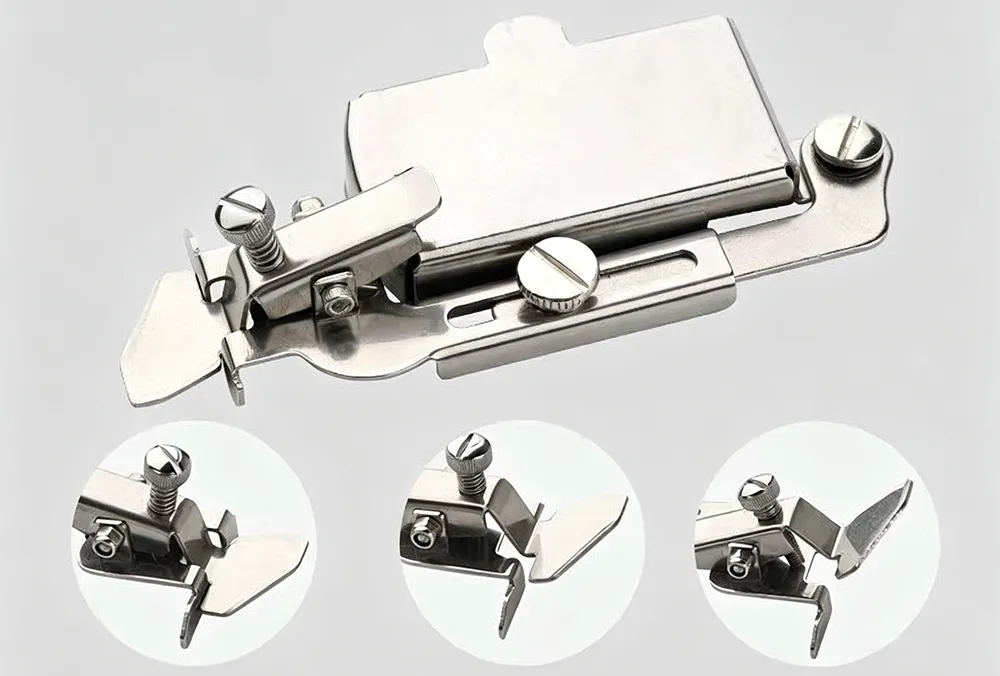
- Magnetic Edge Guide: Attached to the needle plate, allowing for quick width adjustment. Suitable for temporary positioning, thin materials, and home-use machines.

- Bar/Alternating Edge Guide: Fixed to the machine body, offering high stability. Suitable for industrial machines, thick materials (denim, leather), and high-speed operations.
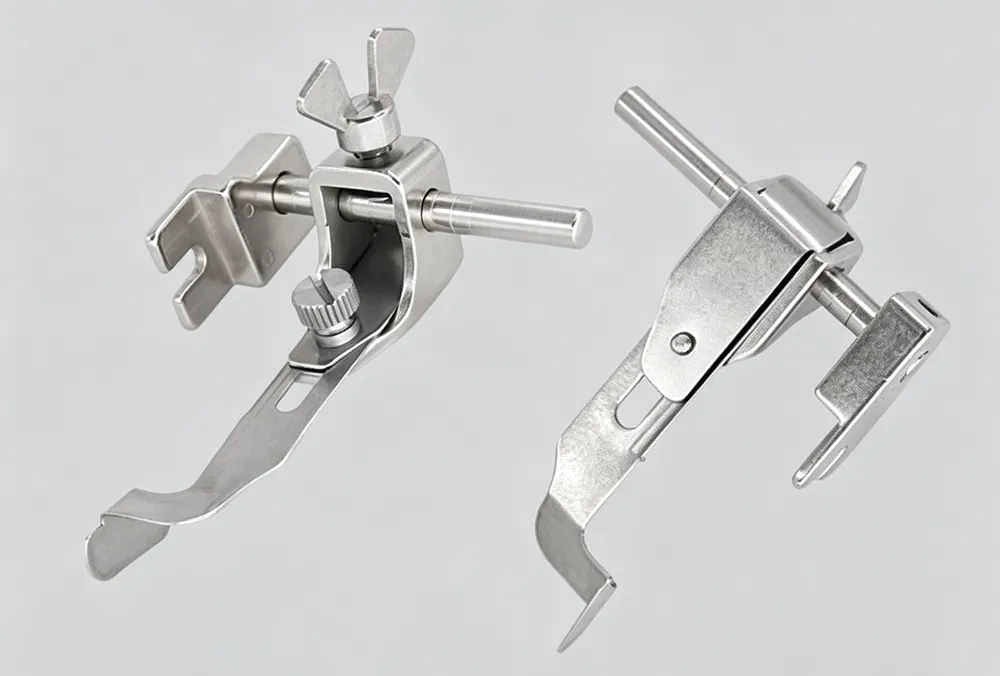
- Aircraft Edge Guide: Mounted on the presser foot, moving up and down with it. Suitable for pressing narrow topstitching (e.g., 0.6cm), right-angled areas such as plackets/collars.
- Multi-Functional Edge Guide: With graduations and multiple settings, allowing switching between different widths and angles. Adaptable to complex processes such as hemming, folding, and double-needle stitching.
To contact us:
Whatsapp:86-13991289750
Wechat:86-18192599756
Email:dekoco@vip.163.com ,sales@kingmaxsew.com
Website:www.kingmaxsew.com