

In the industrial sewing fields of clothing, bags, footwear, and industrial textiles, there is a type of equipment that, thanks to its unique structural design, has become an essential machine for handling three-dimensional, circular, thick material, and enclosed space sewing scenarios-the cylinder bed sewing machine. Unlike the familiar flatbed sewing machine, the cylinder bed sewing machine, with its core feature of a "cylindrical workpiece," perfectly solves the pain points of traditional equipment in sewing three-dimensional products such as bags, sleeves, and boots, including limited space, cumbersome operation, and unstable stitches. It is an irreplaceable professional piece of equipment in modern industrial sewing.

- What is a cylinder bed sewing machine?
A cylinder bed sewing machine, also known as a cylindrical arm sewing machine or tube sewing machine, is most notably characterized by its protruding cylindrical cantilever sewing table (tube seat). The diameter is typically 30–80mm, and the length varies from 100mm to over 300mm.
Core working principle: Fabric or semi-finished products can be directly placed onto the cylindrical tube seat. Utilizing the unobstructed 360° rotation space, continuous sewing is completed under the coordinated drive of the needle, presser foot, and feed dog. Compared to the planar limitations of a flat sewing machine, the tube seat allows for wraparound and deep sewing of three-dimensional objects without forcibly flattening or turning them outwards, structurally adapting to the process requirements of "non-planar" products. Modern tube pressers often employ a three-synchronous integrated feeding design (synchronous movement of needle, presser foot, and feed dog), a large rotary hook, and a high-pressure foot stroke (13–25 mm). They are equipped with servo motors and digital control systems, which balance the penetration power of thick materials, stitch stability, and production efficiency.
- Why does it "monopolize" bag sewing and 3D sewing?
I. 360°free rotation, one-time closed-loop sewing
This is the core value of the cylinder bed sewing machine. For closed/semi-closed products such as bags, FIBCs, canvas bags, and ton bags, the bag body can be directly inserted into the tube base, and a single rotation completes the continuous sewing of the sides, bottom, and opening, without the need for flipping or repositioning midway.
Compared to flatbed sewing machines: Flatbed sewing machines require forcibly turning the bag body outwards and flattening it, making it impossible to reach corners and insides, easily resulting in misaligned stitches, wrinkles, and broken seams, leading to extremely low efficiency.
II. Slender tube body + small nozzle design, reaching deep into enclosed and narrow spaces
Conventional tube sewing machines have a slender tube base, while high-end "small nozzle tube sewing machines" have a more compact head, easily reaching into narrow openings such as bag openings, cuffs, shoe uppers, and boot shafts to complete processes such as inner sewing, handle reinforcement, inner compartment splicing, and edge sealing.
Typical scenarios: Reinforcing the inner straps of FIBCs and filter bags, and deep-loop stitching; lining stitching of leather shoe boots; and inlay stitching of elastic bands on down jacket cuffs-all rely on the "deep-penetrating capability" of the tube press.
III. Unobstructed feeding of thick/multi-layer materials, maximizing the strength of heavy-duty products
Bags, industrial bags, and automotive interiors often use thick canvas, Oxford cloth, PVC, leather, composite sponge, and other multi-layered thick materials. The tube press, without a flat table to obstruct the flow, allows for free stacking and smooth passage of thick materials.
Key configurations: High-pressure foot stroke, high-penetration needle, large rotary hook with thick thread (#20–#30 industrial thick thread), double thread tension, ensuring no skipped stitches or broken threads at multi-layered thick materials and stepped seams, with stitch strength meeting standards to meet the load-bearing and tensile requirements of FIBCs, airbags, and automotive seats.
IV. Smooth curves/corners, preventing fabric deformation.
The tube seat allows the fabric to pass through naturally relaxed and unstretched. When sewing rounded corners, right angles, and curves (such as corners of wraps, corners of bag bottoms, and curves of shoe toes), the fabric is not squeezed or pulled by the flat surface, resulting in no ruffles, no shrinkage, and even stitches.
- Cylinder bed sewing machine applications
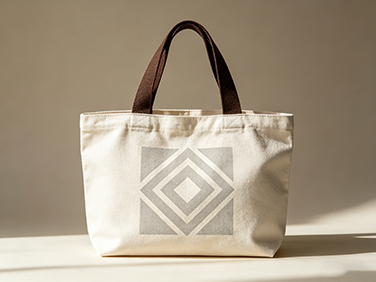
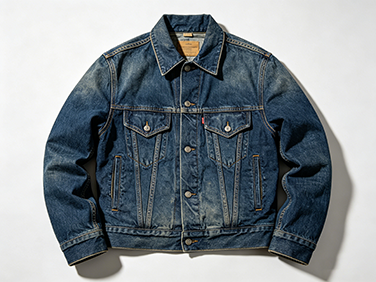
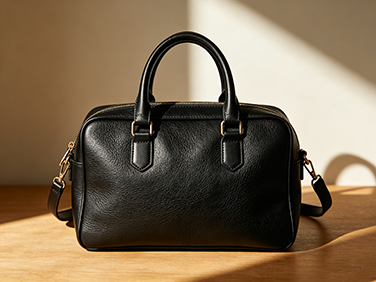
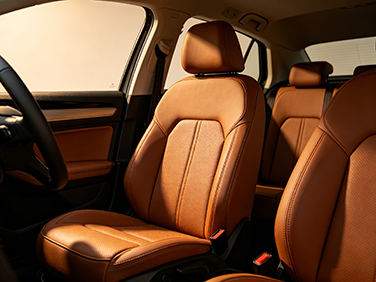
Luggage/Luggage Bag Manufacturing (Core Application)
Main Processes: Side/bottom seams of the bag body, edge binding and piping of the bag opening, reinforcement of handles/ear straps, corner stitching, and inner layer splicing.
Representative Products: Tube bags, container bags, filter bags, canvas bags, briefcases, and suitcases.
Apparel Manufacturing
Core Scenarios: Hemming/elastic band stitching of cuffs, trouser legs, collars, and hems; thick denim hems; 3D splicing of windbreakers and down jackets; sewing of circular parts in children's clothing.
Efficiency Improvement: Cuff sewing eliminates the need for turning the cuffs inside out, completing the process in one go; uniform stitch tightness significantly reduces the defect rate.
Footwear/Leather Goods Manufacturing
Suitable Products: 3D curved surface stitching of leather shoe uppers, boot shafts, athletic shoe uppers, leather bags, belts, and gloves.
Manufacturing Advantages: Fits the contours of footwear, extends deep into the boot shaft, and uses multi-layered stitching of thick leather to prevent slippage and misalignment.
Automotive Interior / Industrial Textiles
Applications: Circular and thick material stitching for car seat covers, door panels, airbags, tents, parachutes, and medical protective equipment.
Performance Requirements: High precision, strength, and stable stitching, meeting the stringent standards of automotive and specialty industries.
If you need more information or quotation for the cylinder bed sewing machine, please don't hesitate to contact us.
To contact us:
Whatsapp:86-13991289750
Wechat:86-18192599756
Email:dekoco@vip.163.com ,sales@kingmaxsew.com
Website:www.kingmaxsew.com